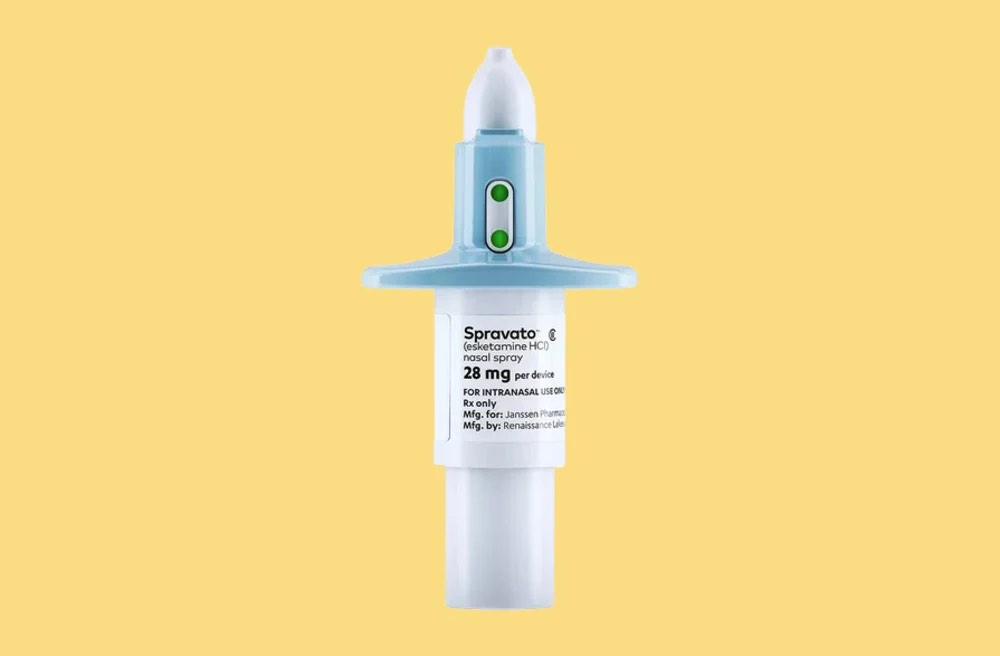
Esketamine (Spravato).

- Brand Name: Spravato®
- Generic Name: Esketamine
What Is Esketamine (Spravato)
Esketamine is the S(+) enantiomer of ketamine, acting as a non-competitive NMDA (N-methyl-D-aspartate) receptor antagonist. Spravato is the FDA-approved formulation of esketamine as a nasal spray for certain severe depressive conditions. It works by modulating glutamate neurotransmission, which appears to lead to faster antidepressant effects in some patients compared to standard antidepressants.
When used at a low dose as an antidepressant, it is believed to help restore synaptic connections in brain cells, which can be damaged by long-term stress and depression.
FDA Approvals: What It Is Approved To Treat
- Treatment-Resistant Depression (TRD): used either as monotherapy or in conjunction with an oral antidepressant. TRD refers to depression that has not responded adequately to at least 2 different antidepressant treatments.
- Major Depressive Disorder (MDD) with acute suicidal ideation or behavior: as an adjunct (i.e., together with an oral antidepressant). This is for adults with severe depressive symptoms and acute suicidal thoughts/actions.
Additionally, recent updates have expanded its approval to allow use as monotherapy (without the need for concurrent oral antidepressant use) for TRD in certain contexts.
Treatment-Resistant Depression (TRD)
Major Depressive Disorder (MDD)
Common Off-Label Uses
Because Spravato/esketamine has shown rapid antidepressant effects, especially in difficult-to-treat depression, there is interest and some early research into off-label uses. Some of these include:
-
Depression in populations not studied in the original trials (e.g., bipolar depression, postpartum depression)
- As augmentation in depressive disorders for faster relief of suicidal ideation symptoms beyond studied populations
- Studies are ongoing to see whether it may help anxiety symptoms, obsessive-compulsive disorder, PTSD, etc. However, as of now, none of these are FDA-approved for Spravato.
Dosage
Spravato is administered by the patient under the direct supervision of a healthcare provider at a certified clinic.
- Induction Phase (Weeks 1-4):
- TRD: The starting dose is 56 mg, administered twice weekly. Doses can be increased to 84 mg, depending on tolerability and efficacy.
- MDD with Suicidal Ideation: The recommended dose is 84 mg, administered twice weekly for four weeks.
- Maintenance Phase (Week 5 and beyond):
- TRD: The frequency is reduced to once weekly or once every two weeks, based on the patient’s response.
What happens if you miss a Dose
Since Spravato is administered in a medical setting, a missed dose is unlikely. However, if a patient misses a scheduled treatment session, they should contact their healthcare provider immediately to reschedule the appointment and discuss any necessary adjustments to their treatment plan.
Contraindications
Spravato should not be used in patients with:
- Known hypersensitivity to esketamine, ketamine, or any of the other ingredients in the nasal spray.
- Aneurysmal vascular disease or arteriovenous malformation.
- A history of intracerebral hemorrhage (bleeding in the brain).
Medication Interactions
Esketamine should be used with caution when taken with other medications that can cause similar side effects, such as sedation or increased blood pressure.
- Central Nervous System (CNS) depressants: alcohol, benzodiazepines, opioids, sedatives. These can increase the risk of sedation, respiratory depression.
- Monoamine Oxidase Inhibitors (MAOIs): potential for increased blood pressure or other adverse effects.
- Psychostimulants: may exacerbate blood pressure elevations.
- Nasal medications: If you use a nasal decongestant or corticosteroid spray, you should take it at least one hour before using Spravato
Other drugs that affect blood pressure or cardiovascular risk may need caution. Also drugs that cloud mental status might worsen dissociation or sedation.
Esketamine Black Box Warning
Spravato carries a Black Box Warning, the most serious warning issued by the FDA for medications. Esketamine can cause significant sedation, which may present as drowsiness or, in some cases, a loss of consciousness. It can also lead to dissociation, a state in which patients may feel disconnected from their body, thoughts, or emotions. Due to these potential effects, patients must be closely monitored by a healthcare provider for at least two hours after each treatment session to ensure their safety and stability before leaving the clinic.
Esketamine is classified as a Schedule III controlled substance because of its potential for abuse and misuse. For this reason, it is only available through a restricted distribution system known as the Spravato Risk Evaluation and Mitigation Strategy (REMS) program, which ensures that the medication is administered in certified healthcare settings under strict supervision.
In addition, like all antidepressants, Spravato carries a risk of increasing suicidal thoughts and behaviors in adolescents and young adults, particularly during the first few months of treatment or when dosage is adjusted. This makes careful monitoring and ongoing communication with healthcare providers especially important during the early stages of therapy.
Risks & Side Effects of Esketamine (Spravato)
Common Side Effects
The most common side effects of Esketamine include:
- Dissociation
- Dizziness
- Nausea and vomiting
- Sedation (sleepiness)
- Vertigo (spinning sensation)
- Increased blood pressure
- Anxiety or feeling anxious
- Lethargy or lack of energy
- Feeling “drunk” or a state of euphoria
- Headache
- Numbness or decreased sensitivity
Serious Side Effects (Seek medical attention immediately if you experience any of these):
- Significant increase in blood pressure: This can lead to a hypertensive crisis or other cardiovascular events.
- Impaired judgment and motor skills: Patients should not drive or operate machinery until the day after a treatment session, following a restful night’s sleep.
- Bladder problems: In rare cases, long-term use can lead to bladder issues, such as pain or frequent urination.
Questions to Ask Your Doctor About Esketamine
- Am I a good candidate for Spravato, and why?
- How does Spravato work, and how is it different from other antidepressants I have tried?
-
What should I expect during a typical treatment session?
-
What are the most common side effects, and what should I do if I experience them?
-
How quickly can I expect to see results?
-
How long will I need to continue treatment?
-
How much does Spravato cost, and is it covered by my insurance?
-
What activities should I avoid on treatment days?
-
How will my doctor monitor my safety and progress?
-
What happens if I miss a treatment session?
Esketamine (Spravato) FAQ
Can I administer Spravato at home?
No, Spravato must be administered at a certified healthcare setting under the supervision of a healthcare provider due to the risk of serious side effects and abuse.
Do I need to continue taking my oral antidepressant with Spravato?
Yes, for most FDA-approved uses, Spravato is used in conjunction with an oral antidepressant.
Will I be able to drive after a treatment session?
No. You should not drive or operate machinery until the day after your treatment session, following a restful night’s sleep.
Find Safe & Effective Mental Health Treatment
If you or a loved one is struggling with anxiety, panic attacks, or insomnia, professional help is available.
At Mental Health Rehabs, we connect individuals with psychiatrists, therapists, and treatment centers that offer medication management, psychotherapy, benzodiazepine tapering programs, and more.
Use our treatment locator to find mental health professionals near you.
Don’t Struggle Alone.
Get Help Today.
Reaching out for help for yourself or a loved one can be overwhelming and stressful, but it doesn’t have to be. If you are struggling to find the right help, or even know where to get started, please feel free to call our 24/7 helpline.
Begin your mental health journey right now!